

There’s a quiet but unmistakable shift happening in private consulting rooms from Colmore Row to Edgbaston.
Professionals who once quietly booked themselves in for FUE surgery are now walking into clinics asking a very different set of questions not about donor site density or graft counts, but about exosomes, growth factors, and what “biologic” hair restoration actually means for their hair, their schedule, and their long-term results.
If you’ve been researching exosome therapy vs hair transplants UK options in recent months, you’re not alone. And if you’re based in or around Birmingham, you’re in a city that happens to be at the forefront of this regenerative shift.
What Is Exosome Therapy, and How Does It Actually Work?
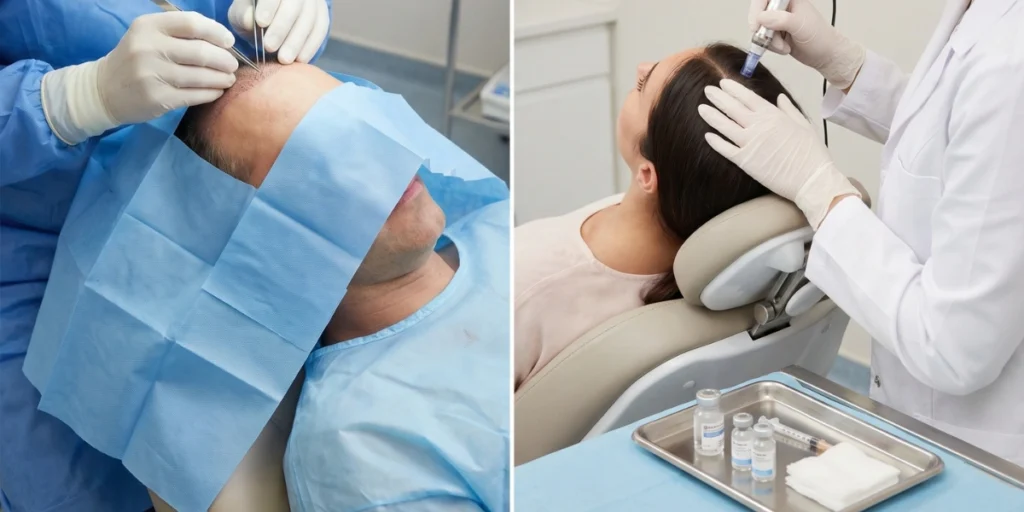
Before exploring why so many people are now comparing exosome therapy vs hair transplants UK options rather than defaulting to surgery, it’s worth being precise about what exosome therapy actually is because there’s still considerable confusion about this, even among well-informed patients.
Exosomes are extracellular vesicles, essentially nano-sized messenger particles naturally released by cells, that carry proteins, lipids, and genetic information between cells. In the context of hair loss, clinically-sourced exosomes typically derived from mesenchymal stem cells are introduced into the scalp to signal dormant or weakened follicles back into an active growth phase.
How Exosome Treatment Compares to Traditional FUE
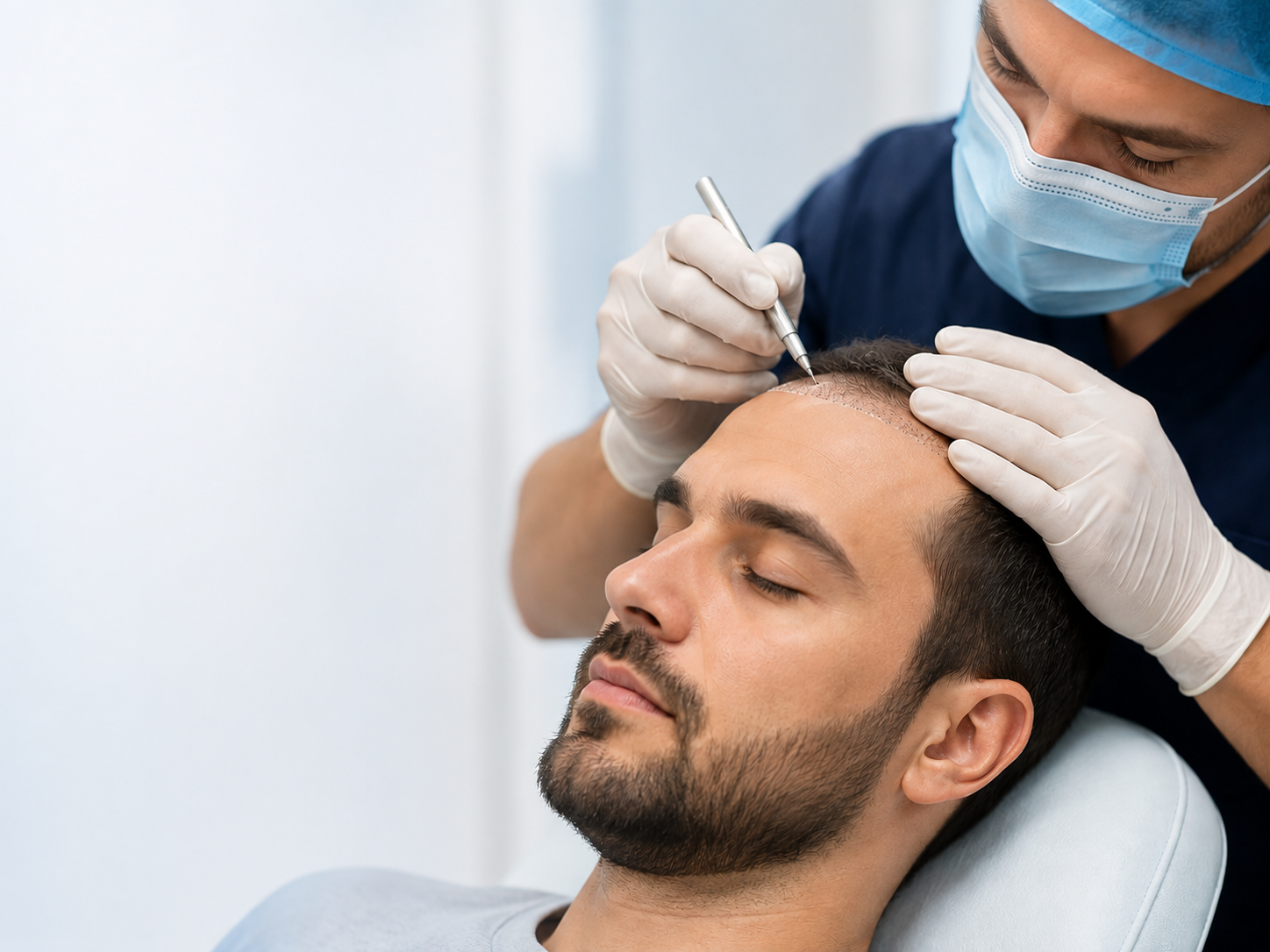
Traditional Follicular Unit Extraction (FUE) surgery physically removes hair follicles from a donor area (typically the back of the scalp) and transplants them into thinning regions. It is a proven and well-established method, but it is fundamentally a surgical relocation of existing follicles. It does not address the biological environment that caused follicle miniaturisation in the first place.
Exosome therapy, by contrast, works at the cellular level. Rather than moving follicles, it attempts to rehabilitate them stimulating the scalp’s own regenerative capacity through targeted biological signalling. This is why it sits within the broader category of regenerative aesthetics solutions, a growing field that treats the root cause rather than just the visible symptom.
The key distinction, as any good scalp specialist in the Jewellery Quarter will tell you, is that exosome therapy is best suited to patients with active but miniaturising follicles those where the follicle is still biologically viable but underperforming. FUE remains appropriate for more advanced hair loss where follicles are already permanently inactive.
Non-Surgical Hair Restoration: Why the Landscape Has Changed in 2026
The growth in non-surgical hair restoration Birmingham services isn’t simply a trend it reflects a genuine evolution in patient expectations and clinical capability. Several factors have converged to make biological approaches more competitive than ever.
First, the science has matured. Early exosome formulations were inconsistent in quality and clinical evidence was limited.
By 2026, standardised, pharmaceutical-grade exosome preparations from reputable laboratories have made outcomes far more predictable. Clinics offering advanced hair loss treatments UK-wide are now able to point to meaningful real-world data rather than early-stage anecdotes.
Second, the patient profile has changed. The rise of remote and hybrid working initially reduced social anxiety around post-surgical recovery but that pendulum has swung back.
Professionals in law, finance, medicine, and corporate leadership in the West Midlands are once again in client-facing environments daily, attending board meetings, presenting to investors, networking at events. Downtime is professionally and socially expensive.
This is precisely why hair restoration for professionals in the West Midlands has become a specific conversation in clinics offering premium hair restoration West Midlands-wide. The question isn’t just “will it work?” it’s “how quickly can I be back in the room?”
Recovery, Results, and Real-World Practicality
What Recovery Looks Like After a Hair Transplant
A standard FUE procedure takes anywhere from four to eight hours, depending on the number of grafts required.
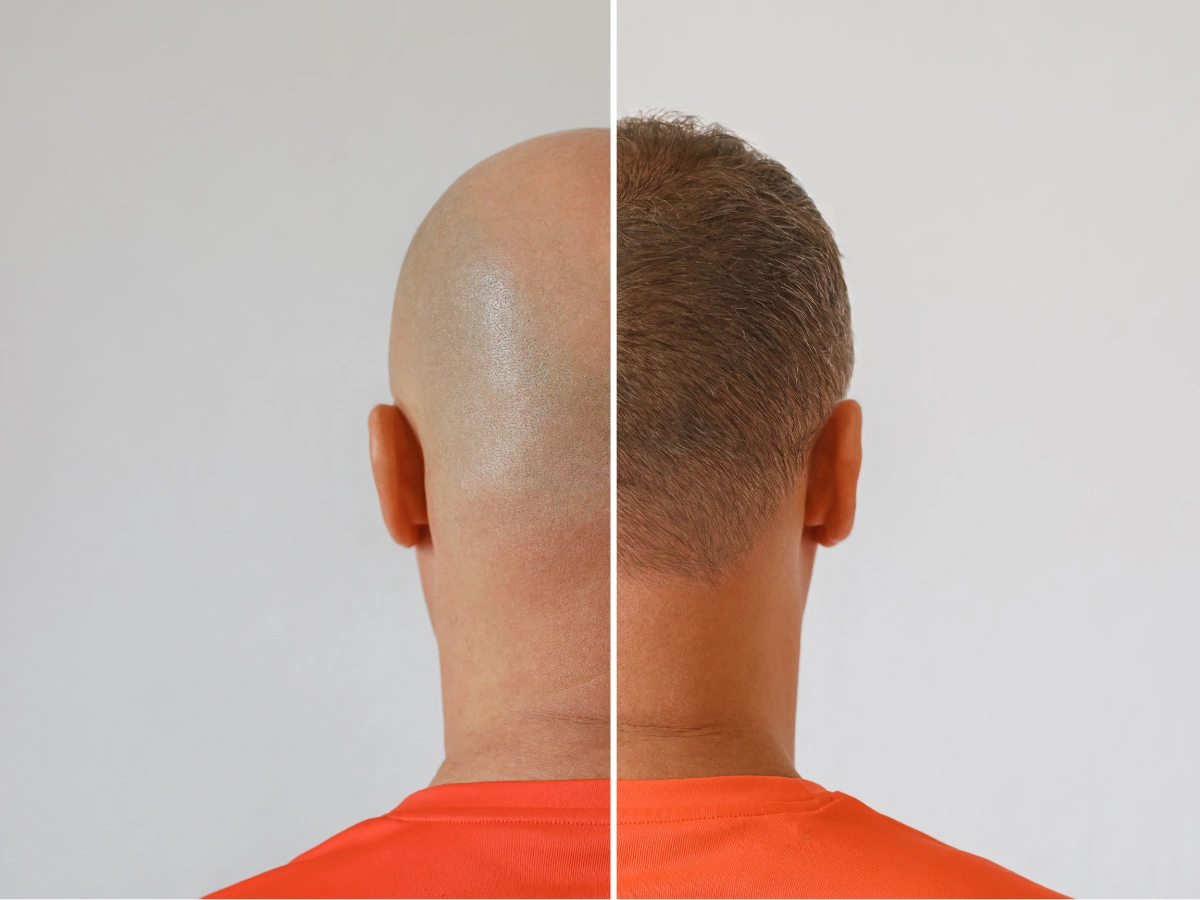
Post-operatively, patients can expect scalp tenderness, visible crusting around grafts, and a restriction on normal activities including exercise, direct sun exposure, and any situation that involves close physical scrutiny for two to four weeks. The transplanted hairs typically shed within the first month before regrowing from approximately four months onwards, with full results visible at twelve to eighteen months.
For a busy professional, this timeline combined with the logistical and emotional management of the visible recovery phase can be a significant commitment. You can explore exactly what this process involves at Ultra Hair Clinic’s dedicated hair transplant Birmingham page.
What Recovery Looks Like After Exosome Therapy
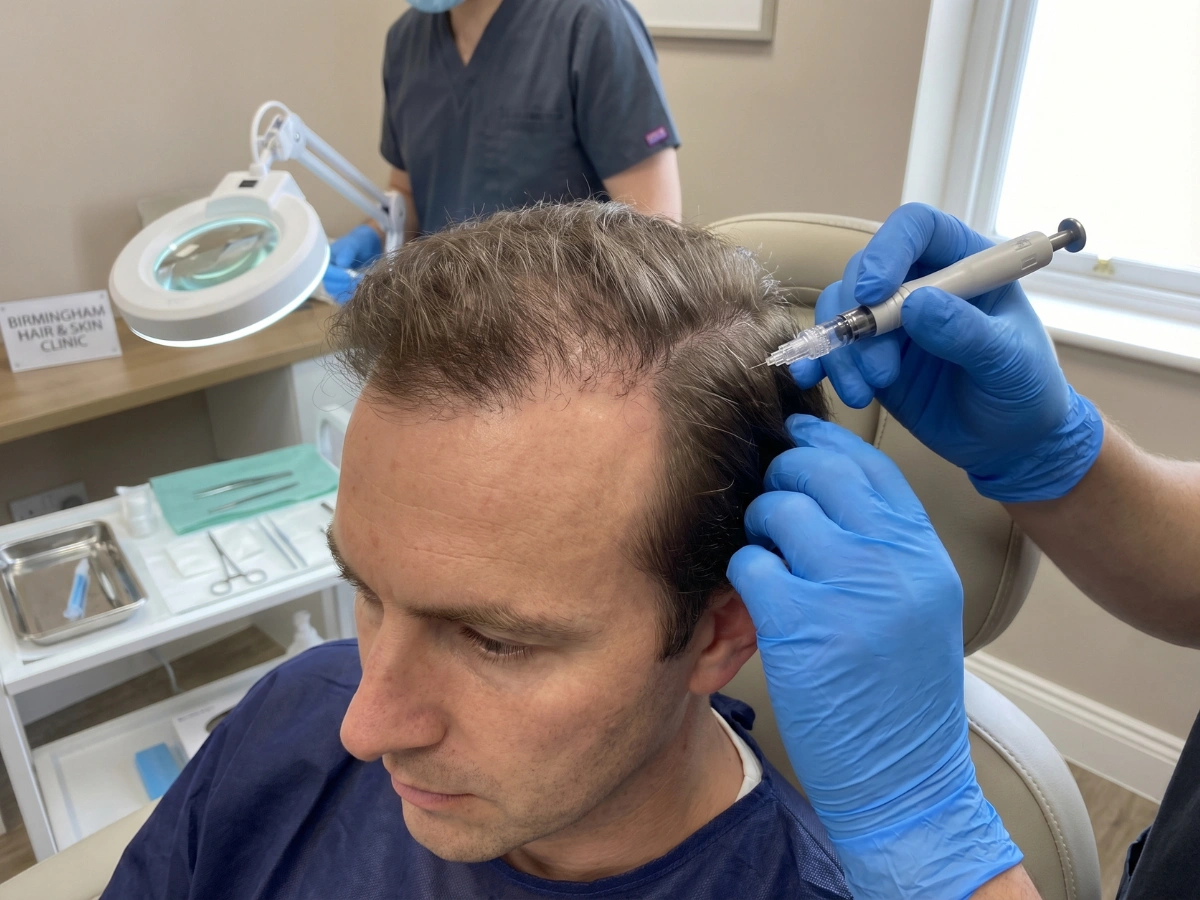
Exosome therapy is typically administered over one to three sessions via micro-injection or microneedling into targeted scalp regions.
The procedure takes between sixty and ninety minutes, with no incisions, no donor site management, and virtually no downtime. This has given rise to what clinics are now marketing with genuine clinical backing as the lunchtime hair treatment Birmingham category.
Patients attend in the middle of a working day and return to their desk or their next meeting the same afternoon.
Redness and mild scalp sensitivity may occur for twenty-four to forty-eight hours. Visible improvements in hair density and texture typically develop over three to six months, with results continuing to mature over twelve months.
Ongoing maintenance sessions every six to twelve months help sustain the biological environment that supports healthy follicle function.
Exosomes vs FUE Cost 2026: An Honest Comparison
Cost is, understandably, one of the first questions patients raise and the exosomes vs FUE cost 2026 comparison is more nuanced than a simple headline figure suggests.
A full FUE hair transplant in the UK currently ranges from approximately £4,000 to £15,000 or more, depending on the number of grafts, the reputation of the clinic, and the surgeon’s experience. This is typically a one-time procedure, though some patients require a second session.
A course of exosome therapy generally two to three initial sessions typically ranges from £1,500 to £4,500, with maintenance sessions at approximately £800 to £1,500 thereafter.
When factoring in the cost of time away from work, the psychological cost of a visible recovery, and the potential need for repeat transplant sessions as hair loss continues to progress, the long-term value proposition of exosome therapy becomes considerably more competitive.
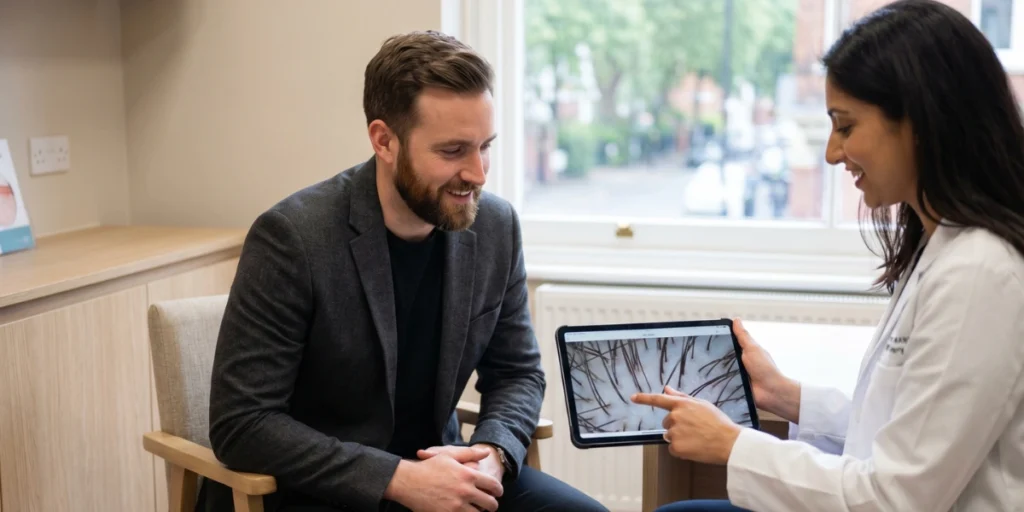
A private hair clinic in Birmingham offering both options should be able to provide an honest, personalised assessment of which approach delivers better value for a specific patient’s stage of hair loss, follicle health, and lifestyle.
This kind of nuanced consultation rather than a sales-led recommendation is the hallmark of credible advanced aesthetics Birmingham city centre practices.
Why Birmingham’s Professionals Are Choosing Biologic in 2026
The concentration of legal, financial, and professional services firms along Colmore Row and in Birmingham’s broader city centre creates a specific patient demographic: individuals who are visible, ambitious, image-conscious, and extraordinarily time-poor.
For this group, the appeal of a hair loss clinic on Colmore Row offering biologic treatments is not primarily about avoiding surgery it’s about optimising outcomes relative to lifestyle constraints.
The language around hair restoration has also shifted. Where patients once spoke about “getting a transplant” with a degree of privacy and slight embarrassment, biologic and regenerative hair treatments carry a different cultural weight.
They are discussed in the same breath as IV therapy, hormone optimisation, and longevity medicine. Visiting a hair clinic in Birmingham city centre for exosome therapy is, for many professionals, categorically distinct from undergoing surgery and that distinction matters to them.
The Edgbaston and Solihull corridors, home to a significant concentration of high-net-worth individuals, have seen particular growth in demand for regenerative hair loss treatment Edgbaston and aesthetics clinic Solihull services. Ultra Hair Clinic’s consultation process is designed precisely for this kind of client discreet, personalised, and held in private treatment rooms where the conversation can be had properly. Concierge-style hair restoration is no longer a London-only proposition.
The Bigger Picture: Regenerative Medicine and the Future of Hair Restoration
Comparing exosome therapy vs hair transplants UK options today is really a conversation about where hair restoration medicine is heading. Surgery, for all its efficacy in the right cases, is a product of an era when we had limited biological tools.
Regenerative medicine represents the next phase of treating hair loss as a systemic and cellular problem, not just a cosmetic one.
The research pipeline is expanding rapidly. Exosomes are being studied in combination with PRP (platelet-rich plasma), photobiomodulation, and topical growth factor formulations.
Exosome hair therapy Birmingham practices at the clinical frontier are already offering combination protocols that stack these modalities for synergistic effect. Ultra Hair Clinic’s existing PRP therapy and laser hair regrowth services reflect exactly this integrative approach.
For patients considering an alternative to hair transplant surgery UK, it’s worth understanding that the biologic category is not static.
What’s available in 2026 is meaningfully more advanced than what was available in 2022, and the trajectory suggests continued improvement in both efficacy and accessibility.
Choosing the Right Clinic: What to Look For
Not all clinics offering exosome therapy are equal, and the relative newness of standardised exosome preparations means that product quality, storage protocols, and clinical experience vary significantly.
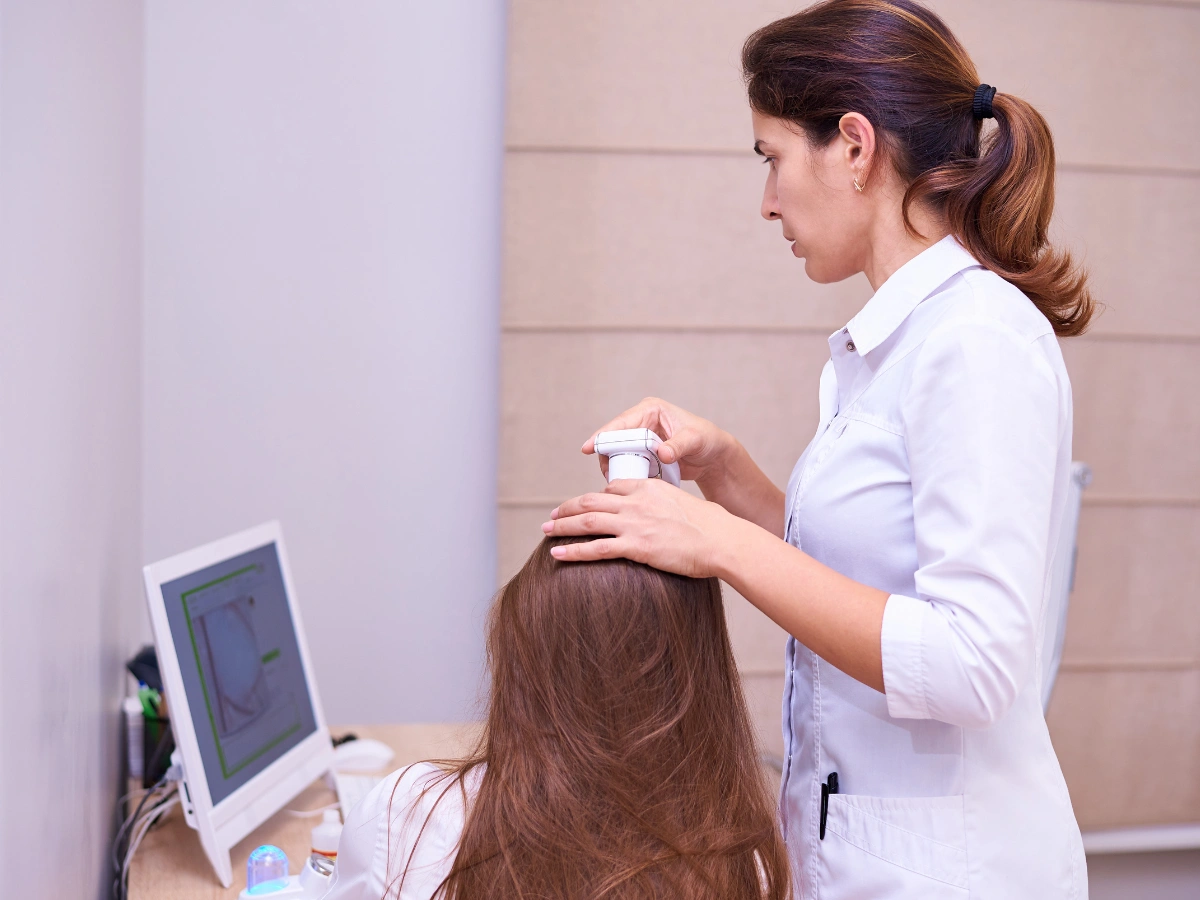
When evaluating non-surgical hair restoration services, prospective patients should look for clinics that use named, traceable exosome preparations with published quality data, have a dedicated scalp specialist who can assess follicle viability prior to treatment via a thorough hair analysis, offer transparent discussion of both surgical and non-surgical pathways rather than defaulting to one approach, and provide realistic outcome expectations based on clinical assessment rather than marketing materials.
The decision between exosome therapy vs hair transplants UK is not one-size-fits-all. For a patient with early-stage androgenetic alopecia and healthy donor follicles, exosome therapy may be sufficient to stabilise and reverse miniaturisation.
For a patient with advanced hair loss and large areas of permanent follicle loss, FUE may remain the more appropriate primary intervention potentially with exosome therapy as a complementary protocol to support graft survival and scalp health post-surgery.
Final Thoughts
Birmingham in 2026 is home to a growing ecosystem of clinics offering genuinely sophisticated hair restoration options.
The most credible practitioners in the city are not selling exosomes as a magic bullet, nor are they dismissing surgical options in favour of a trend. They are doing what good medicine has always required: assessing the individual, understanding the biology, and recommending the most appropriate pathway.
If you’re a professional in the West Midlands weighing up your options, the most important first step isn’t choosing a treatment it’s finding a clinic that will give you the information you need to make that choice with confidence.
Book a consultation at Ultra Hair Clinic and speak to a specialist who can assess your hair, discuss your goals, and map out a treatment pathway that works around your life.
Explore more from Ultra Hair Clinic: