

If you have noticed more hair in your shower drain lately, or your scalp feels persistently dry and irritated, you might be wondering whether your tap water is to blame.
It is a question we hear regularly from clients across the West Midlands. The answer is more nuanced than a simple yes or no.
Birmingham hard water hair loss is a topic that gets a lot of online attention, but the reality of what is actually coming out of your taps depends very much on exactly where you live. Some residents are dealing with genuinely hard, mineral-heavy water.
Others face different issues entirely: chlorine, ageing pipe infrastructure, and residual mineral content that can still take a toll on hair and scalp health over time.
Here is what you actually need to know in 2026.
Is Birmingham Water Hard or Soft?
This surprises many people: Birmingham city itself primarily receives soft water. Most of it is sourced from the Elan Valley reservoirs in mid-Wales, a remote upland catchment area that produces exceptionally clean, naturally soft water with low mineral content.
So, in strict terms, if you live in central Birmingham, your water hardness is relatively low.
However, the picture changes significantly once you look beyond the city centre. The wider West Midlands region sits on a geology that produces genuinely hard water, with average hardness levels around 222 parts per million (ppm). For context, water above 200 ppm is classified as hard by UK standards.
Which Areas Have Hard Water in the West Midlands?
If you live in or around any of the following areas, you are very likely dealing with hard water on a daily basis:
- Solihull
- Walsall
- Wolverhampton
- Dudley
- Sandwell
- Parts of the Black Country
In these areas, the elevated calcium and magnesium levels in tap water can genuinely affect your hair and scalp, and the evidence for this is well-established.
Why Is My Hair Thinning in the West Midlands?
West Midlands hard water hair damage is not simply a myth or anecdotal concern. Research has shown that prolonged exposure to high-mineral water can degrade the hair shaft, reduce moisture retention, and interfere with the scalp’s natural environment.
When hard water is repeatedly used to wash hair, the minerals (particularly calcium and magnesium) accumulate on the hair cuticle.
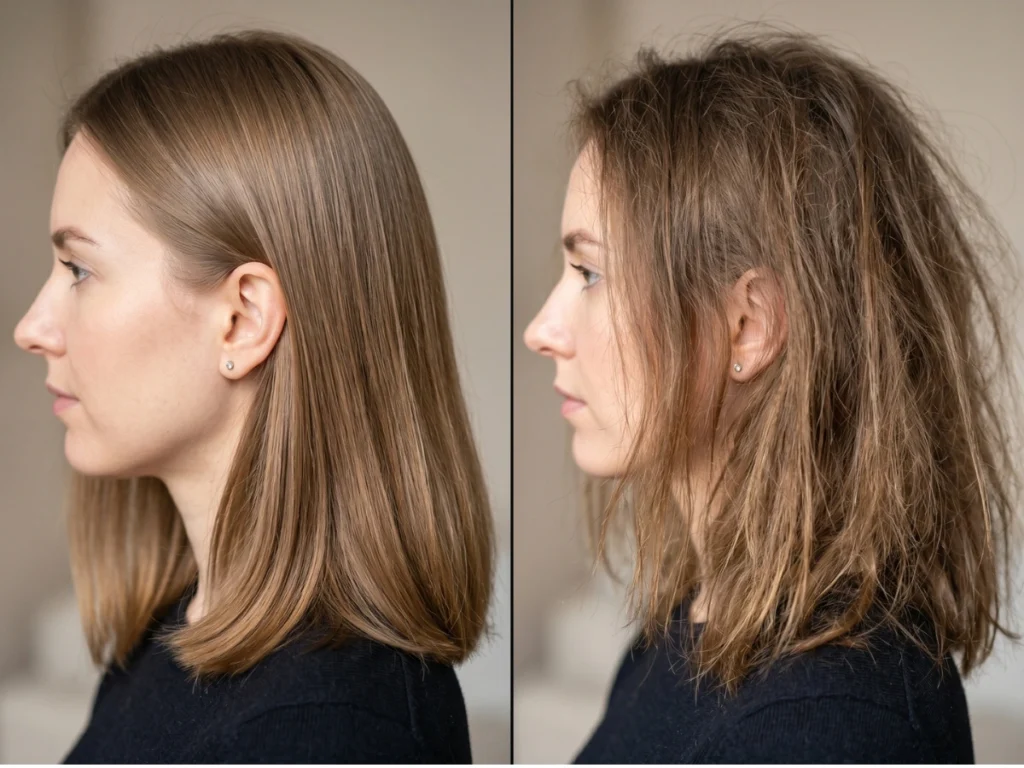
This build-up can make strands feel rough, appear dull, and become more prone to breakage. Over time, tap water hair breakage in the UK is a genuine and underappreciated contributor to what many people assume is simply genetic hair loss or normal shedding.
The question of whether hard water causes hair thinning is one that has received increased clinical attention in recent years.
The current evidence suggests that while hard water alone is unlikely to cause the same type of hair loss as androgenetic alopecia, it can accelerate shedding, weaken existing strands, and compromise scalp health in ways that contribute to the appearance of thinner, less dense hair.
If you are already experiencing noticeable thinning, exploring thinning hair treatment options sooner rather than later is always advisable.
Can Hard Water Clog Your Hair Follicles?
This is one of the most common questions we receive, and it is worth addressing directly. The concern around hard water clogging hair follicles is based on sound reasoning: when mineral deposits accumulate around the follicle opening, they can create a barrier that interferes with healthy hair growth cycles.
Clinical observations suggest that mineral deposits around the follicle can contribute to low-grade inflammation of the scalp, which over time may impair the normal hair growth cycle.
This is not the same as the follicle being physically blocked in the way a blocked pore on the face might be, but it can disrupt the environment that healthy hair growth depends on.
Pair this with the effects of chlorine, which Severn Trent and other UK water suppliers add to mains water as standard, and you have a combination that can strip the scalp’s natural oils, alter the microbiome, and leave the scalp more vulnerable to irritation, flaking, and inflammation. Severn
Trent water hair thinning concerns are therefore not entirely unfounded, even for Birmingham residents on relatively soft water.
How Tap Water Affects Hair Health in the UK
Even if you live in a soft water area like central Birmingham, your tap water can still affect your hair and scalp in several ways that are worth understanding.
Chlorine and Chemical Additives
All mains water in the UK is treated with chlorine or chloramine. While these chemicals are essential for safe drinking water, they can be harsh on hair. Regular exposure strips moisture from both the hair shaft and scalp, contributing to dryness, frizz, and increased vulnerability to breakage.
Old Pipe Infrastructure
Many homes and buildings in Birmingham and the wider West Midlands still rely on older pipework. Water that starts its journey soft can pick up minerals, rust particles, and other residues as it passes through ageing infrastructure. What arrives at your shower head may not be as pure as what left the treatment works.
Elan Valley Water and Scalp Sensitivity
Interestingly, very soft Elan Valley water Birmingham residents receive can sometimes cause its own issues.
Soft water tends to create a lathering effect that leaves a film on the scalp, making it harder to thoroughly rinse away shampoo and conditioner.
This residue build-up can contribute to scalp irritation and blocked follicles over time. It is an ironic side effect of water that is technically clean and mineral-light.
Practical Ways to Protect Your Hair from Hard Water in the UK
Whether you are in a hard water postcode or dealing with chlorine-related scalp sensitivity in Birmingham, there are practical steps you can take to minimise the impact of your tap water on your hair health.
- Install a filtered shower head:
A quality shower filter can significantly reduce chlorine and some mineral content before water reaches your hair. Look for filters with KDF media or activated carbon.
- Use a chelating or clarifying shampoo:
These are specifically formulated to remove mineral deposits from the hair shaft. Use them weekly or fortnightly if you are in a hard water area.
- Try an apple cider vinegar rinse:
A diluted ACV rinse (one part ACV to four parts water) helps to close the hair cuticle and reduce mineral build-up. It is a low-cost, effective option many trichologists recommend.
- Apply a leave-in moisturiser:
Replenishing moisture after washing is especially important if you are regularly exposed to chlorine or hard water. Look for products containing glycerin, ceramides, or hyaluronic acid.
- Consider a water softener:
For households with very high hardness levels (particularly in Solihull, Walsall, or Wolverhampton), a whole-house water softener is a long-term investment that can make a meaningful difference.
- Rinse with filtered or bottled water:
A simple but effective short-term measure is doing a final rinse with filtered water to remove any remaining mineral residue.
When to Seek Professional Help

If you have made changes to your washing routine, tried protective products, and still notice persistent shedding, scalp irritation, or visible thinning, it may be time to look beyond your water supply.
Hair loss is multifactorial: water quality is one contributing variable, but hormonal changes, nutritional deficiencies, stress, and scalp conditions all play significant roles.
A professional assessment at a hair loss clinic in Birmingham can help identify the root causes of your specific hair concerns, whether those are environmental, medical, or structural.
A thorough consultation will typically include a scalp analysis, medical history review, and where appropriate, trichoscopy to assess follicle health.
Equally, if you are experiencing scalp inflammation, persistent dandruff, or visible follicle congestion, exploring dedicated scalp treatments in Birmingham from a qualified practitioner can address the issue directly, rather than managing symptoms at home indefinitely.
For those with more acute hair loss patterns, it is also worth understanding whether an underlying condition such as alopecia could be contributing to what you are experiencing.
Advanced Treatment Options Available in Birmingham in 2026
If your hair loss or scalp concerns persist despite lifestyle adjustments, you do not have to simply live with it. There are now highly effective, evidence-backed treatments available locally that go well beyond over-the-counter solutions.
PRP hair treatment (Platelet-Rich Plasma therapy) uses your own blood’s growth factors to stimulate dormant follicles and improve scalp circulation.
It is one of the most well-researched non-surgical hair loss interventions available, with a growing body of clinical evidence supporting its effectiveness, particularly for those experiencing early to moderate hair thinning triggered by environmental factors like water quality.
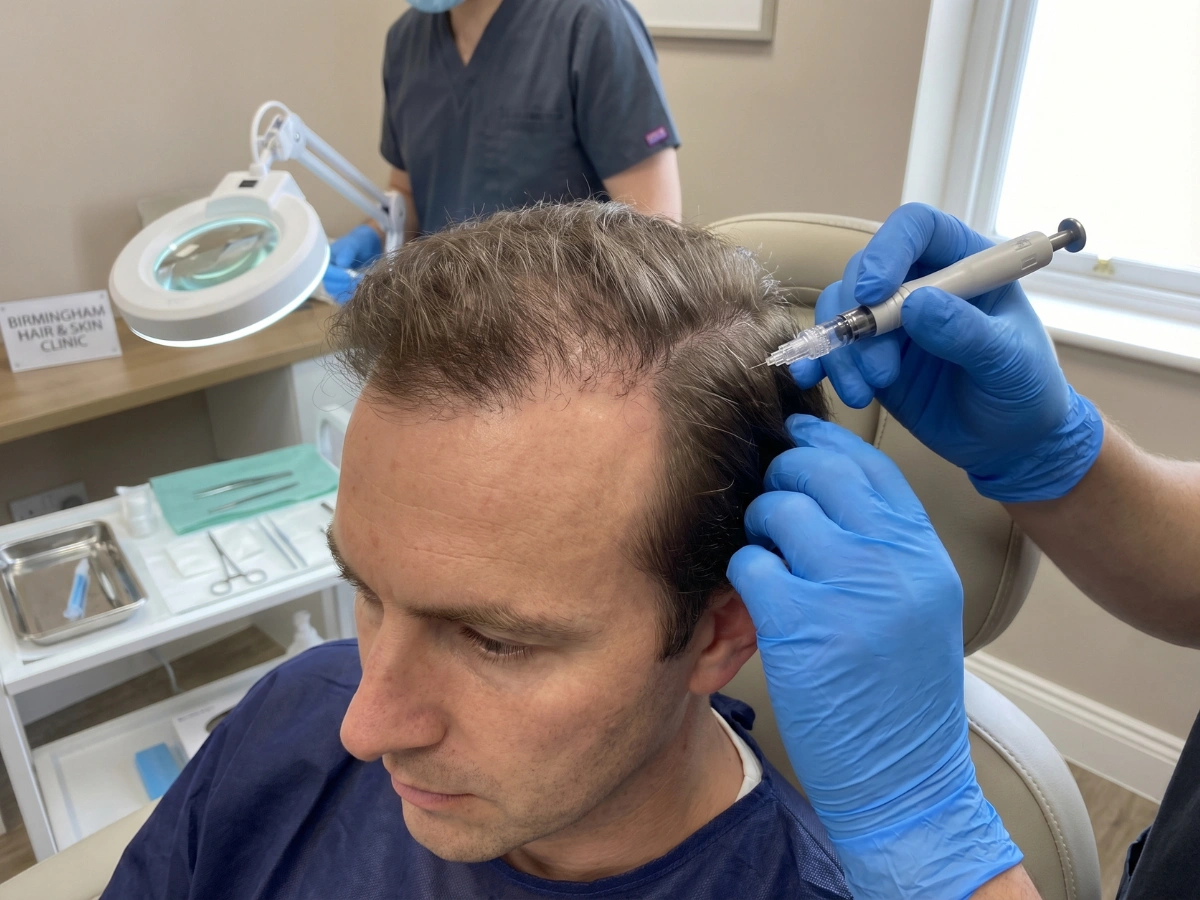
Mesotherapy for hair involves the precise micro-injection of vitamins, minerals, and active compounds directly into the scalp.
This targeted approach nourishes follicles at the root level, improving the conditions for healthy hair regrowth and addressing nutrient deficiencies that topical products simply cannot reach.
For residents in hard water areas, mesotherapy can be especially effective in counteracting the mineral-stripping effects of prolonged water exposure.
For those experiencing more advanced follicle damage or hair thinning, exosome therapy for hair loss represents one of the most exciting developments in regenerative hair medicine. Exosomes, which are nano-sized cellular messengers, help to repair and rejuvenate follicle cells, making them particularly useful where conventional treatments have plateaued.
Whatever stage you are at, a personalised treatment programme at Ultra Hair Clinic can be tailored to your specific concerns. You can book a free consultation here to take the first step.
Frequently Asked Questions
Can hard water cause hair loss in the UK?
Hard water alone is unlikely to cause the same pattern of hair loss as genetic conditions like androgenetic alopecia.
However, prolonged exposure to high-mineral water can weaken the hair shaft, increase breakage, irritate the scalp, and disrupt the follicular environment in ways that contribute to the appearance and experience of hair thinning. In the UK, areas with water hardness above 200 ppm, which includes much of the West Midlands, are most likely to see these effects.
Does hard water cause hair thinning?
Research suggests that hard water can cause hair thinning by weakening the hair strand structure over time.
Calcium and magnesium deposits accumulate on the hair cuticle, reducing its ability to retain moisture and making it more prone to breakage. When this breakage is consistent and widespread, hair can appear noticeably thinner and less voluminous, even if the number of follicles has not changed.
Is Birmingham water hard or soft?
Birmingham city centre predominantly receives soft water sourced from the Elan Valley reservoirs in Wales, making it relatively low in minerals.
However, the wider West Midlands region, including Solihull, Walsall, Wolverhampton, and Dudley, has genuinely hard water, averaging around 222 ppm. Even soft-water Birmingham residents may experience hair and scalp issues due to chlorine, ageing pipes, and mineral residue.
How do I protect my hair from hard water in the UK?
The most effective approaches include installing a chlorine-filtering shower head, using a chelating shampoo weekly to remove mineral deposits, doing a diluted apple cider vinegar rinse to close the cuticle, and applying leave-in moisturisers with ceramides or glycerin.
For households in particularly hard water areas, a whole-house water softener is a worthwhile long-term investment. If hair concerns persist despite these measures, a consultation with a hair specialist is advisable.
This article is intended for informational purposes only. For personalised advice regarding hair loss or scalp concerns, please consult a qualified trichologist or hair restoration specialist.